UMU at the 21st RUFORUM AGM: A Week of Partnership, Innovation, and Continental Vision
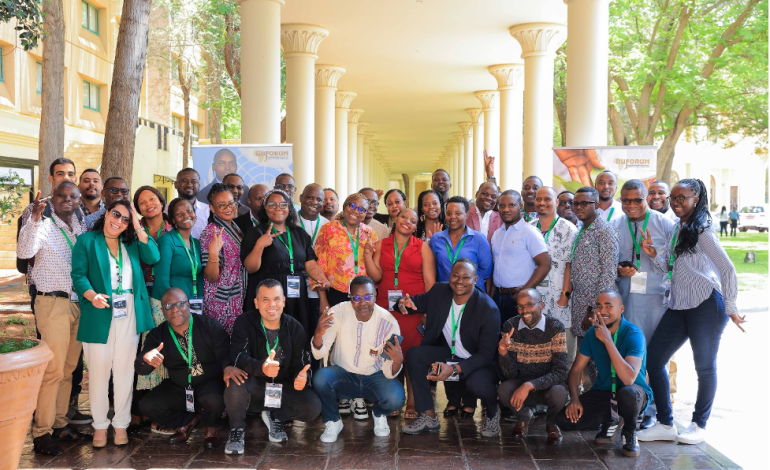
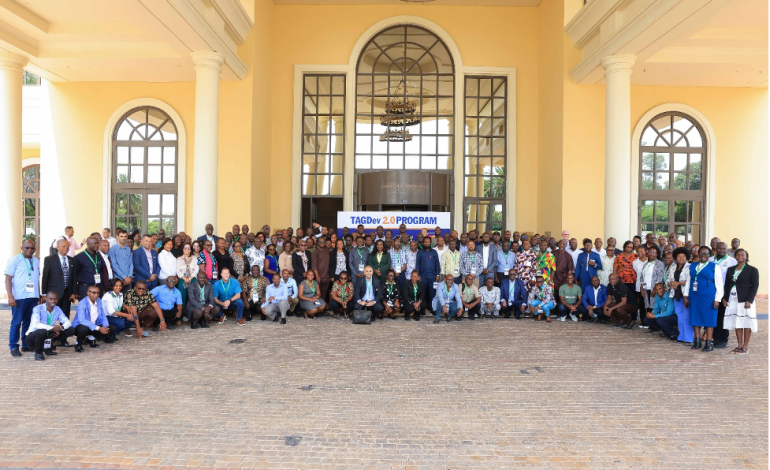
Uganda Martyrs University (UMU) travelled to join other institutions across Africa at the 21st Annual General Meeting (AGM) of the Regional Universities Forum for Capacity Building in Agriculture (RUFORUM), held in Gaborone, Botswana. Hosted under the theme “Positioning Africa’s Universities and the Higher Education Sector to Effectively Impact Development Processes on the Continent,” the AGM brought together Vice Chancellors, policymakers, researchers, innovators, youth leaders, and development partners committed to reshaping Africa’s higher education landscape. For UMU, this gathering became a strategic platform to strengthen continental presence, deepen partnerships, and reaffirm its role in transformative agricultural education especially through the TAGDev 2.0 programme implemented in partnership with RUFORUM.
One of the broad highlights of the week was UMU’s central role in advancing the TAGDev 2.0 agenda, a programme focused on practical, work-integrated learning, agribusiness incubation, and inclusive education for youth from disadvantaged backgrounds. Throughout the AGM, UMU actively contributed to conversations on agricultural transformation, university-industry linkages, curriculum innovation, and youth employability affirming its commitment to shaping graduates who are not only academically grounded but also ready to address real-world challenges.
Another key aspect of UMU’s participation was its involvement in high-level continental dialogues, which addressed issues such as climate-resilient agriculture, higher education financing, access for refugees and displaced persons, digital transformation, and agrifood systems development. These discussions showcased UMU’s alignment with continent-wide priorities and reinforced the university’s role as an institution that values collaboration and evidence-based decision-making. The interactions with institutions across 40 countries strengthened UMU’s position as a university that both contributes to and learns from the broader African academic community.
A number of powerful messages delivered by continental leaders shaped the reflection points of the AGM. A recurring theme “Collaboration is our power” echoed throughout the week, emphasizing the need for African universities to work together in addressing complex challenges.
The Minister of Higher Education in Botswana reinforced this call, noting that “Africa’s growth will be shaped by the knowledge we produce, the partnerships we build, and the graduates we empower. Universities must lead with innovation and relevance.” This perspective closely aligns with UMU’s continuous efforts to strengthen research, partnerships, and community engagement.
Similarly, Ketlhatlogile Mosepele, Vice Chancellor of BUAN, challenged universities to evolve into fourth-generation agile institutions, industry-connected, community-driven, and research-intensive, a vision that UMU is actively embracing through staff development, community projects, and student-centered learning.
Inclusivity emerged as another broad theme during the AGM, with several sessions dedicated to improving higher education access for refugees, displaced youth, and learners from underserved backgrounds. This aligns closely with UMU’s inclusive scholarship framework under TAGDev 2.0, which prioritizes opportunities for young people facing socio-economic barriers. The discussions reinforced UMU’s commitment to equity and highlighted the importance of universities as safe, supportive environments for all learners.
UMU’s participation generated several institutional benefits. The knowledge shared across sessions contributes to strengthening the university’s internal capacity from leadership, curriculum improvements and research development to enhanced community engagement models. The AGM provided greater visibility for UMU in continental conversations on development and education, positioning it as a proactive institution committed to innovation and collaboration. Students also stand to benefit immensely, with expanded opportunities for scholarships, agribusiness incubation, work-integrated learning, and international exposure all made possible through the strong partnerships reaffirmed during the AGM.
The week also opened new pathways for research and innovation collaborations in areas like climate-smart agriculture, digital technologies, entrepreneurship, and food systems security. These opportunities will enable UMU staff and students to co-create solutions that respond to both local and regional development challenges, advancing research impact and experiential learning.
Underlying all these achievements is the invaluable partnership UMU enjoys with RUFORUM and the Mastercard Foundation. Through TAGDev 2.0, UMU continues to implement an educational model that is practical, inclusive, community-focused, and responsive to the needs of young Africans. The programme’s emphasis on hands-on learning, leadership development, and agribusiness incubation demonstrates how partnerships can transform universities into engines of opportunity and economic growth.
The key takeaways revolve around collaboration, innovation, inclusivity, and action. The AGM did not simply provide discussions; it offered a renewed sense of purpose. UMU is now positioned to deepen the partnerships formed, enhance work-integrated learning across its programmes, support student and staff innovations, and expand outreach so that more Ugandan youth can benefit from transformative agricultural education.
Ultimately, the 21st RUFORUM AGM was a convergence of vision, ideas, and commitment. For Uganda Martyrs University, it was both a moment of reflection and a springboard for the future. With strengthened partnerships particularly with RUFORUM affiliated partners, UMU is well positioned to champion agricultural transformation, advance inclusive higher education, and empower the next generation of leaders who will drive development across the continent.